

Soap was infrastructure.
Like the road that all other products later follow.
It had three superpowers: it was cool, divisible, and transportable.
Therefore, it became the first "universal" format.
When you pick up a solid shampoo or cleanser today, you're already learning the rule.
"Hard piece = used many times, needs to be dried, protected from water."
Why this matters: Because many mistakes with hard tools are not about composition, but about habits.
Soap taught them first.
Practical takeaway: if a solid remedy "doesn't work", first check not it, but your usage regimen: moisturizing, dosage, drying, storage.

Homemade soap traditions
Why home production was so important
Homemade soap was not just for hygiene.
He was a backup, a security, and even a kind of "household chemistry."
When a product is born in a kitchen or backyard, quality means simple things.
Is it hard, is it not brittle, is it not irritating, is it "long-lasting?"
And also: is it predictable?
Because no one wants surprises on their skin.
Why this matters: Our sense of “quality” is still often inherited from the logic of soap.
The simpler, the more reliable.
Practical takeaway: if you like "clear" products, start with simpler formulas.
Especially when you get into a tough routine.
What "good soap" meant historically
Historically, "good" often meant "mature."
The better it is dried, the harder and more economical it is.
Today, a similar principle operates in many solid instruments.
The less water inside, the longer it lasts.
Rough rule of thumb: a classic bar of soap is often around 90–120 g .
And solid shampoo often weighs around 50-80 g .
This doesn't mean one is "better."
This means: different functions, different dosage.
Why this is important: When comparing prices, compare not "per piece", but "per use".
This changes the whole picture.
Practical takeaway (simple calculation):
-
Rough rule of thumb: about 1–2 g of solid product can be used per wash (depending on hair, water, rubbing).
-
This means that a 60 g piece can theoretically provide about 30-60 uses .
Microstory #1: "Why did he get used to me so quickly?"
Rasa bought a hard detergent and within two weeks it "disappeared".
She became frustrated and decided that the hard measures were "marketing."
Then it turned out that she was holding a piece on the wet corner of the shower.
When it started drying on a soapstone, it began to last several times longer.
Why it matters: The hard format is very responsive to storage habits.
This is not a detail, but half of the result.
Practical takeaway: give the piece a chance to dry for at least 8-12 hours between uses (rough rule of thumb).

Trade routes and regional "signatures"
Why were the formulas so different?
The reason for the differences was often simple: what was available around.
In some places, olives dominated, in others, laurel, and in still others, animal fats.
Thus, regional "signatures" were born.
And people learned to recognize: this soap is "ours", and that one is "from there".
Why this is important: Today you do the same thing, just with different words.
"Creamy is good for me", "I like it hard and dry", "I need something softer".
Practical takeaway: when choosing a solid cleanser or shampoo, look for the logic of the "base".
Is it more "olive" (softer, creamier feel) or more "hard/dry lather" (often stronger lather).
Quick reference: regions and "mood" (table)
| Regional type | Basic idea | What is famous for the feeling? | Why did it happen like this? |
|---|---|---|---|
| Mediterranean "olive" | lots of vegetable oils | softer, "creamy" | olive cultivation and trade |
| Aleppo type (olive + laurel) | olive oil + bay oil | stronger, specific smell | local raw materials and tradition |
| Marseille type | standards, purity | "clean", very versatile | quality rules and reputation |
| Nordic/Farmhouse Soap | what is at hand | cool, practical | availability and domestic need |
Aleppo soap often contains ~2–20% laurel oil (depending on the variant).
It can also be traditionally aged for about 6 months to 1 year .
Marseille soap and the idea of "72%"
Marseille soap has become a reputation game.
When standards emerge, trust emerges.
The often-heard figure of 72% is associated with traditional requirements.
History also mentions the Edict of 1688 , which strengthened the rules and the name.
Why it matters: Standards are an early “INCI logic.”
A person always wants a clear framework: what kind of thing is this?
Practical takeaway: If you're a beginner, you might find it easier with products that have a clear "type" description.
Not only "the smell is nice", but also "what is it for, what is the feeling".
Microstory #2: "my skin loves simplicity"
Ieva spent a long time searching for the "perfect" cleanser and everything was annoying.
Eventually, she returned to a simpler routine and noticed that her skin calmed down.
She realized one thing: her skin doesn't like surprises.
And that's not a "weakness." It's information.
Why this matters: Sometimes the best upgrade isn't more assets, but less noise.
The soap tradition is a perfect reminder of this.
Practical takeaway: if you have sensitive skin, choose less fragrance and a simpler base.
And always do a small test before incorporating it into your daily routine.

Soap and hygiene culture
How cleanliness became the norm and even a status
Cleanliness has long been about more than just health.
She was a signal: "I'm okay, I take care of myself, I belong."
As cities grew, regulations became stricter.
More "needs" appeared: hands, clothes, smells, hair.
Soap was the simplest tool here.
He made cleanliness achievable.
Why this matters: Today, we sometimes overdo it.
And then the skin or scalp starts to protest.
Practical takeaway: cleanliness is not "the more, the better."
If your skin feels tight after washing, reduce the aggressiveness of your wash or increase your moisturizing afterwards.
Cleanliness, smell and "sense of order"
The smell became a second layer.
First – wash. Then – smell “clean”.
This explains why solid perfumes and balms were born so easily later.
People were already ready for the idea: "small piece, big effect."
Why it matters: When you understand this story, you blame yourself less.
If you "need" a scent, it's not a whim. It's cultural logic.
Practical takeaway: if you want less product, think in layers:
-
1 product for cleanliness.
-
1 product for scent/comfort.
Often this is enough.
Travel and the advantage of being in "solid form"
Liquids have rules when traveling.
The EU recommendation is often stated as follows: capacity up to 100 ml in one container, and everything in a transparent bag up to 1 liter .
However, some airports are switching to new scanners.
For example, Vilnius and Kaunas airports have announced the possibility of transporting in containers of up to 2 liters (depending on the applicable procedure).
Still, the reality is simple: rules vary by airport.
And solid products usually cause less headaches.
Why it matters: It's not just "green" that wins when it comes to travel.
Simplicity wins.
Practical takeaway: if you fly often, have "travel minimalism": one solid cleanser, one solid hair product (if applicable), one fragrance product.

The Bridge to Cosmetics: Why It Matters for Later Products
Soap made the hard format understandable
When solid shampoos, shower tiles, cleansing balms, and solid perfumes appeared, people already had "instructions in their heads."
Keep dry. Do not overdose. Do not immerse in water.
But there is an important nuance.
Not everything that is solid is soap.
Some solid cleansers or shampoos contain milder detergents (syndet).
They may feel different, especially in hard water.
Why it's important: Mistake #1 - using solid shampoo as soap, rubbing too long and too hard.
Then the hair may feel "torn".
Practical takeaway: start with a low dose and short exposure.
The first goal is to distribute gently, not to "get as much foam as possible."
Microstory #3: "I wanted less stuff"
Aušra wanted less plastic and fewer bottles.
She switched to hard measures and the first week was strange.
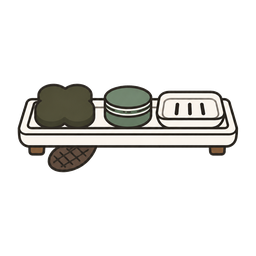
Then she created a simple system: one soap dish, one travel box, one "spare" piece.
And suddenly everything became easy.
Why it matters: Hard measures require a system, not motivation.
When a system is in place, habits stick.
Practical takeaway: create 3 places: shower, travel, supplies.
This reduces the likelihood of chaos.

Side note: 5 inventions that made solid shapes possible
-
Understanding fats and alkalis.
Soap is formed when fats react with alkali. This is saponification. -
Molds and castings.
Without shapes, there would be no "uniform pieces," and without uniformity, there would be no trust. -
Standardized measurements.
When you can repeat a recipe, quality stability comes into play. -
Paper and simple packaging.
The solid product must not leak, so the packaging can be lighter. -
Transport and trade networks.
When a product travels, it becomes part of the culture, not just a household item.
Why this matters: Today's boom in solid products is not a "miracle."
This is a logical continuation.
Practical takeaway: When choosing a hard product, think about whether it is designed for travel, storage, and repetition.
If so, it will likely be comfortable.
Key findings and internal references
-
The history of soap explains why solids require dryness and system.
-
Regional soaps taught us to value "type" and not just scent.
-
The culture of hygiene has led to the layering of cosmetics.
Read more: #4 Industrialization (how factories replaced solid forms).
Also: #9 Packaging (Why Hard Tools Win Logistics).

Myths and unexpected facts
1) Myth: "If it doesn't foam, it doesn't clean"
What is true: foam is a sensation, not a guarantee of quality.
What to do: Evaluate the result after rinsing, not the amount of foam.
2) Myth: “a solid product is always drying”
What's true: it's not the shape that dries, but the strength of the rinse and what you do afterwards.
What to do: After washing, apply cream or balm within 1–3 minutes (rough rule of thumb), while the skin is still slightly damp.
3) Myth: "soap is the same everywhere"
What is true: the base, oils and production logic are different, so the sensation is different.
What to do: choose a "type" according to your skin: gentler for everyday use, stronger after sports.
4) Myth: “hard shampoo = soap for hair”
What's true: Not always. Some solid shampoos are not "real soap."
What to do: Use less product and rinse well, especially in hard water.
5) Myth: “hardware is not suitable for travel because it is inconvenient”
What is true: often the opposite, as they circumvent liquid restrictions (e.g. the 100 ml and 1 liter bag logic).
What to do: Have a small box or bag so the piece doesn't get wet in your suitcase.
6) Myth: “if it’s natural, it automatically works for everyone”
What's true: Sensitive skin can also react to natural fragrances or oils.
What to do: Do a patch test on a small area of skin before regular use.
7) Myth: “expensive = will last a long time”
What's true: Storage is often determined by your soaping and drying.
What to do: Invest in a good storage solution, not just a piece.

Practical tips and solutions
Choice: How to Choose Without Stress (4 Tips)
-
Choose based on feeling , not just on promise.
If you don't like "dry clean," look for something creamier. -
Start with one product per function.
Because when you try 3 at once, it's hard to figure out what works. -
If your skin is sensitive, start with less fragrance.
Smells are often the biggest "surprise". -
Compare the price per use, not per gram.
Rough rule of thumb: 60 g can provide 30-60 uses if the dosage is moderate.
First use: to avoid disappointment (4 tips)
-
Use a lower dose for the first week.
Overdose is common. -
Do not "drill" the product under water.
Wet your hands, wet a piece, distribute. -
Rinse well.
Especially for hair. -
Always finish with moisturizing after washing.
This often resolves the "dry" sensation.
Storage and durability (3 tips)
-
Hold it so that the water runs off.
A soap dish with holes often works wonders. -
Allow to dry for 8-12 hours between applications (rough rule of thumb).
If the piece is always wet, it will melt. -
Have a separate box for travel.
And only put a dried piece in it.
Sensitive skin and scalp (3 tips)
-
Patch test: small area, 24-hour observation (rough rule of thumb).
Especially if there are fragrances or essential oils. -
If it drags, shorten the contact.
Less scrubbing, more rinsing. -
If your skin is "rebellious," go back to a simpler routine for a week.
Then add new products one by one.
Quick start checklist (what to do when you just bought something)
-
Choose one place where the piece will dry.
-
First week: lower dose, shorter rubbing.
-
After washing: moisturize within 1–3 minutes (rough rule of thumb).
-
For travel: a box or bag, but only for a dry piece.
-
Observe your skin for 3-7 days and only then decide if it is "suitable".
Troubleshooting checklist (if it seems to be "not working")
-
Do you keep a piece in a wet corner?
-
Are you rubbing for too long and using too much?
-
Do you rinse well (especially your hair)?
-
Do you use moisturizer afterwards?
-
Is this really the product you need (not a "one size fits all")?
-
Is your water hard and leaving plaque? (If so, sometimes a more acidic hair conditioner helps.)

FAQ (Frequently Asked Questions)
Is a solid cleanser always soap?
No.
Some are syndet type, so they feel softer.
Why does a solid product melt too quickly?
Mostly due to storage.
It doesn't have time to dry.
Can I store the solid product in the shower?
Yes, if it stands on a draining soap dish.
If you lie in a puddle, it will simply disappear.
Are hard tools suitable for air travel?
Usually yes, because there are limits on liquids (e.g. 100 ml and 1 liter ).
Still, check the practices of the specific airport.
How do I know if I'm too strong?
If it stretches the skin, it itches, or stings.
Then reduce rinsing or switch to a milder option.
Is a patch test necessary?
Yes, if you have sensitive skin or the product has a scent.
Especially if you change several things at once.
How long should you "give a chance" to a new solid tool?
Often 7–14 days is enough (rough rule of thumb).
But if clear irritation occurs, discontinue earlier.

Conclusion
The history of soap is not just nostalgia.
It is a very practical guide to living with a rigid format.
The most important things to take:
-
Hard tools love dryness and order.
-
The regions taught us to choose by "type" and base.
-
Hygiene and smell have always been a part of culture.
-
Many "problems" are solved with a lower dose and better storage.
And now I'm curious:
-
What was your experience with hard tools like in the first week?
-
What's most annoying: numbness, sensation, or travel storage?
Tags:
Previous
Solid Cosmetics: The 2-Minute Science and Routine
Next
The origins of solid cosmetics: ancient balms
Paskutinės naujienos
-
Jan 12 2026
Why solid shampoo is not soap
-
Jan 11 2026
Packaging is a culture: from paper to cans
-
Jan 10 2026
Instagram, ASMR and selfies: cool cosmetics
-
Jan 10 2026
The age of liquids: how bottles became premium

-
Jan 10 2026