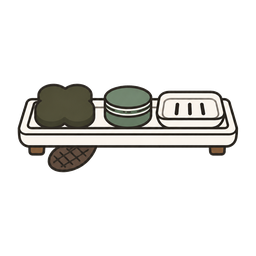


If you "want to love" hard cosmetics, but sometimes they get on your nerves, you're not alone. One time everything lathers up perfectly, the next time the piece is slippery, the perfume is "too close," and storing it in the bathroom ends up in a sad mess.
The good news is that it's almost always not you or a "bad product" that's to blame. Most often, there's just a lack of clear understanding of how solid products activate and what routine they require.
In this article, you'll get two things: "2-minute science" (without the dry terms) and three modern routines that are realistic and can be followed. And also - quick fixes if something doesn't work.
2-minute science: how solid cosmetics work
Solid cosmetics are not “liquid cosmetics, only solid.” They work through a different logic: concentration + activation .
The easiest way to remember one sentence is this: you briefly "make" a product yourself using water, heat, and friction .

Concentration and activation (water/heat/friction)
Liquid products often contain a large amount of water. Solid products usually contain little or no water. Therefore, the amount needed is often less.
Activation occurs in three ways:
-
Water : moistens the surface and helps to "take" the right amount.
-
Heat : Warms the palms and skin, making balms/solid perfumes soften.
-
Rubbing : 10-15 seconds of rubbing often yields more than "a little more product."
Why it matters: If you skip activation, the product appears to be "inactive" even though it simply wasn't "activated."
Practical takeaway: instead of "more product", first do "better activation": moisten → rub → only then add.
Cleans, "helps settle" or protects: a simple mental model
Solid cosmetics typically do one (or more) of three things:
-
Cleans (rinses): e.g. solid shampoo, cleanser, shower gel piece.
-
Leaves on skin/hair ("settles"): e.g. conditioning a piece of some shower pieces with emollients.
-
Protects (barrier): e.g. balms, solid perfumes (usually a fatty base).
Below is a very simple table to make it clear what to expect.
| Category | What should you feel when using it? | What is often expected (but not necessarily will be) | Quick check |
|---|---|---|---|
| Clean | slipperiness, foam, or a "clean" feeling | "like soap for everything" | Does it wash off well, does it leave a film? |
| Nourishes | softness, less roughness | "must foam like shampoo" | is it easier to comb out? |
| Safe | comfort, "locked" moisture | "must be absorbed like water" | Does it stretch less or dry less? |
Why it matters: Disappointment often comes from false expectations (“shampoo should act like soap,” “solid perfume should smell like it’s being sprayed”).
Practical takeaway: Before using, ask yourself: should this item be washed or kept?

Why “less product” often works (but not always)
Since the product is concentrated, 2-4 swipes or a few turns on the hair are often enough. But.
There are situations where “less” doesn’t work:
-
very hard water (needs more activation or another base),
-
very long/thick hair (needs more contact),
-
too little water (the product does not have time to "give up").
Why it matters: Too much often creates a worse result: film, heaviness, an “not completely washed” feeling.
Practical takeaway (rough rule): if it seems like "too much", halve the amount next time, but extend the blending time.
A small but important safety reminder
If you use solid perfumes or balms with fragrances or essential oils, do a mini patch test : apply a small amount to the inside of your forearm and observe for 24 hours. Especially if you have sensitive skin.
Why it matters: It's not "scary," just smart. Skin loves predictability.
Practical takeaway: apply a new scented product less often and less frequently for the first week.

Who is suitable for solid cosmetics (and when are they annoying)
Hard cosmetics usually "stick" not to age, but to the rhythm of life and sensory tolerance. See where you recognize yourself.
Travel / gym / city movement
If your life includes a gym bag, weekend getaways, or frequent "home to city" trips, hard formats make a lot of sense.
-
Airplanes usually have a 100 ml capacity limit per liquid container and a 1 liter transparent zip-lock bag.
-
However, at some airports, with the introduction of new generation scanners, the rules may be relaxed (for example, in Lithuania, it was announced that containers of up to 2 liters could be carried at certain airports).
-
However, the safest strategy if you don't want any surprises: pack as if the 100 ml rule applies (because rules can vary by airport and even terminal).
Why it matters: When you don't have to hunt for travel-size bottles, your routine becomes simpler.
Practical takeaway: have a separate mini "travel kit" that you just throw in your bag.
If you are sensitive to the senses or like a subtle scent
Some women can't stand:
-
too strong smells,
-
stickiness,
-
a feeling of "greasy film",
-
too much foaming (yes, it happens).
Solid products can be a good solution because they often allow for very precise dosing. But they can also be annoying if you don't like rubbing, waiting, or "playing with textures."
Why it matters: If "quickness" is most important to you, choose formats that require the least activation.
Practical takeaway: start with one solid product, not the "whole shelf."
For minimalists and fans of the "less stuff" routine
If you like a clean bathroom look and less packaging, solid formats often fit into life very naturally.
But minimalism has one condition: neat storage . Without it, everything becomes wet, soft, and messy.
Why this is important: Solid products do not like constant moisture.
Practical takeaway: "air gap" is more important than "a nice shelf."
Who is most often disappointed (frustration profiles)
If you recognize at least one, it's worth planning "protection" immediately:
-
Hard water : shampoo may seem "not as effective" and hair may feel "coated."
-
Bad storage habits : The piece is always in a puddle, without air.
-
Tactically dislikes erasing : It's annoying that you have to "work at it."
-
You expect shampoo = soap : and then you get roughness instead of softness.
Why this matters: Many disappointments are not the “quality” of the product, but the wrong choice of base.
Practical takeaway: if you have hard water or a sensitive scalp, go back to the taxonomy in Article 2 and choose a base according to your needs (e.g. syndet vs. saponified) .

Modern solid cosmetics routine
Here are three routines that are suitable for today's life: little time, lots of movement, lots of "in-between" moments.
Each routine has: steps, hold, and an explanation of why it works.
Minimalist routine (when you want less, but better)
Goal: 1-2 solid products that don't clog.
Steps:
-
Moisturize your hair or skin.
-
2-4 swipes of shampoo or cleanser (not 20).
-
Massage for 10-15 seconds to activate.
-
Rinse longer than you think is necessary.
-
If you use a conditioner, apply it only to the lengths, not the roots.
Storage:
-
Place on a soap dish with holes or on a rack.
-
Let dry for 30-60 seconds before covering the box (a rough rule of thumb).
Why it works: Less product + more activation gives a cleaner result and less “film.”
Practical takeaway: If your hair is "heavy" after washing, the problem is almost always the amount or rinsing.
Micro story: you come home from work, with one thing on your mind – a quick shower. The first time you applied too much, and your hair looks “not quite done.” The next time you do the opposite: less strokes, more massage, and a longer rinse. The result suddenly becomes “oh, this is how it should be.”
Travel routine (when you live out of a bag)
The goal: everything fits in a small bag and doesn't leak.
What is worth having (without brands):
-
a small piece of solid shampoo (it is not necessary to carry the whole piece),
-
hard washcloth or shower piece,
-
solid perfume or balm,
-
box with ventilation or insert,
-
mini mop ( to briefly dry the piece).
Steps:
-
In the shower, moisturize first. a piece.
-
Activate the product in your palms, not "directly on your whole body."
-
If the water is different, start with a smaller amount and observe the sensation.
-
After use Dry the piece briefly with a cloth and leave to air.
Storage:
-
If the box is airtight, there must be a liner or spacer inside.
-
Don't leave it wet. piece directly on the plastic bottom.
Why it works: When traveling, the biggest enemy is airless humidity.
Practical takeaway: It's better to have 2 small pieces for travel than one big one that's always wet.
Micro story: weekend in Tallinn, small hotel shower, nowhere to go for help piece. The first night you put it on the edge of the sink and in the morning you found it “soft”. The second night you did it differently: you briefly drained it and put it in a box with a gap. The piece remained normal, and you were calm.
Desk + Handbag Routine (When You Want to Be "Organized" Without Making a Noise)
Goal: a mini ritual that doesn't take up time and doesn't look weird.
This is where solid perfumes often become the star because:
-
no need to spray in the air,
-
you can apply it only where you want,
-
can be dosed very delicately.
Steps:
-
Open the box, briefly warm the pad of your finger.
-
Take a small amount and apply to pulse points.
-
Start with 2-3 light touches (a rough rule).
-
If you want "a little more," add it after 10 minutes, not right away.
Storage:
-
Do not store near a radiator or in the sun.
-
In a car, the temperature can quickly exceed 35°C in the summer, so hard balms can soften (a rough rule of thumb).
Why it works: Layering in small amounts looks neater and is less annoying to those around you.
Practical takeaway: Solid perfumes are often a “close to the skin” scent. That’s a plus, not a minus.
Micro story: you have a meeting in the afternoon, and in your head – “I would like to feel fresher”. Spraying perfume in the office sometimes seems like too much. You apply a minimal amount of strong perfume, just for yourself. And you feel that little “tidying up” effect that changes your mood.

Practical tips to make everything work (without nerves)
Below are specific rules that save you a lot of testing.
1) Selection (so you don't hit the wrong base)
-
If you have a sensitive scalp, look for a gentler cleansing sensation rather than "maximum lather."
-
If your hair tends to get weighed down, choose products that rinse out easily and don't leave a film.
-
If the water is hard, consider products with "chelators" (see glossary).
2) The first time (so you don't make a classic mistake)
-
Do the first wash as a test: less product, more massage.
-
Rinse longer. Yes, seriously.
-
If your hair is long, distribute the product by foaming it in your palms, not rubbing it along the entire length.
3) Storage (80% of problems arise here)
-
A solid product needs air. Always.
-
If you keep it in a box, there should be a gap or insert inside.
-
If The piece is always moist, it gets "eaten" faster and may start to smell strange.
4) Travel (so it doesn't turn into mush)
-
Have one "travel" box that is ventilated.
-
Dry the piece briefly after use.
-
It's still worth having a "100ml mode" plan for a flight, even if some places allow more.
5) Sensitive skin/scalp (claim-safe, but real)
-
Start with a lower frequency if your skin reacts.
-
Avoid rubbing too hard. It's better to rub longer but more gently.
-
Test a new scented product on a small area for 24 hours.
6) Maximum result (when you want to "wow")
-
Activate solid shampoo by lathering it in your palms, not by "scratching" it through your hair.
-
Conditioning Apply a piece to the lengths, especially the ends.
-
Layer strong perfumes: a little now, a little later.

Quick start: checklist (when you just bought)
-
Use less product than you want the first time.
-
Activate by rubbing or massaging for 10-15 seconds.
-
Rinse longer.
-
Allow to dry on a surface with an air gap.
-
If the box is only with an insert or spacer.
-
For solid perfumes: start with 2-3 touches.
-
If your skin is sensitive: do a 24-hour patch test.
Beginner Mistakes + Quick Fixes
Here are four of the most common mistakes. Each has a very simple solution.
Too much water + wet piece = soft porridge
When The piece gets soaked, it starts to melt in the wrong places. Then it seems like it "finishes too quickly."
Why this is important: You lose the product not in use, but in storage.
Correction:
-
let it dry for 30-60 seconds before placing it in the box (rough rule),
-
choose a soap dish with holes,
-
Have a mini cloth on your trip.
Internal link: See article 2 on differences in storage formats.
Poor storage (no air)
A solid product left in a puddle is like bread in a bag: it softens, changes, and "is no longer tasty."
Why it matters: Storage changes both hygiene and the feel of use.
Correction:
-
air gap is mandatory,
-
if you are taking a shower, look for a place with less direct splashes,
-
sealed box – only for a short time.
Internal link: see article 2: "solid cosmetics hygiene and storage".

You hope that the shampoo piece = soap (and disappointed)
Some pieces are soap bases (saponified oils) and some are syndet. The feel can be completely different.
Why it matters: The wrong base can result in roughness or "scratching."
Correction:
-
if your hair is rough after washing, try a different base,
-
in hard water, some options often work better than others,
-
check the vocabulary and composition (at least minimally).
Internal link: See article 2 on "syndet vs soap base".

Too much strong perfume (and then it smells “wrong”)
Solid perfumes are often “close to the skin.” If you apply too much, you can end up with a greasy layer instead of a stronger scent.
Why it matters: Scent projection isn't just about quantity. It's about base, temperature, and skin.
Correction:
-
start with 2-3 touches,
-
add after 10-15 minutes, if necessary,
-
Apply to pulse points, not "everywhere."
Internal link: See article 2 on solid perfume formats and expectations.
Myths and unexpected facts
Below are five of the most popular myths, with very practical "what to do".
1) Myth: “a solid product is always more hygienic”
What it really is: hygiene depends on use and storage.
What to do: Keep dry, with an air gap, and do not use on broken skin.
2) Myth: "If it doesn't foam, it doesn't clean"
What's true: The amount of foam is not a direct measure of cleaning.
What to do: Focus on massaging and rinsing, not on "mountains of foam."
3) Myth: “solid shampoo is one size fits all”
What really matters: base and water make a huge difference.
What to do: If it doesn't work, it doesn't necessarily mean "hard shampoos aren't for you." It may be that a specific type isn't right for you.
4) Myth: “solid perfumes have to smell like they’re sprayed”
What it really is: it's often an "intimate" scent, more to you than to those around you.
What to do: Use as a subtle layer or "update" rather than as a "footprint across the room."
5) Myth: “solid products always melt and spoil”
What's true: they melt when constantly wet or kept in heat.
What to do: Keep it cooler (around 20-25°C at room temperature is the safest approximate zone) and give it some air.

Troubleshooting: checklist (if it seems to be "not working")
-
Are you using too much product? Try using 50% less.
-
Are you activating enough (10-15 seconds of massage/friction)?
-
Are you rinsing long enough?
-
Is Is the piece kept dry, with an air gap?
-
Is the water hard (film, roughness)? If so, a different type of base may be needed.
-
Do you apply solid perfume in small layers instead of one thick one?
-
Does the new scent/product irritate your skin? If so, stop and test on a small area.
Glossary and pronunciation guide
A short glossary so that compositions and descriptions are no longer "magic".
-
Syndet (sin-det) – gentler synthetic detergents (not soap).
-
Saponified oils (sa-po-ni-fi-kuo-ti) – a soap base obtained by "saponifying" oils.
-
Surfactants (sur-fak-tan-tai) are substances that wash away grease/dirt.
-
Anhydrous (an-hi-dri-nis) – without water (a common logic for solid balms).
-
Occlusive (o-klu-zi-nis) – creates a protective layer, reduces moisture loss.
-
Emollient (e-mo-lien-tas) – "softens", provides slip, comfort.
-
Humectant (hu-mek-tan-tas) – attracts water (e.g., the logic of hydration).
-
Chelator (che-la-to-ri-us) – helps deal with hard water minerals.
-
Hard water – water with more minerals, which can change the feel on your hair/skin.
-
pH (pe-ha) – acidity; important for feel and compatibility.
-
Sebum (se-bu-mas) is the natural oil of the skin.
-
Cuticle (ku-ti-ku-lė) – the "scales" on the surface of the hair, which determine its smoothness.
-
Deposition (de-po-zi-ci-ja) – when some substances "remain" on the hair/skin.
-
Rinse-off (rins-of) – a rinse-off product.
-
Leave-on (liv-on) – left on the skin/hair.
-
PAO (pe-ao) – “period after opening”, e.g. 6M or 12M on the packaging.
-
Preservatives – help control microbiological stability (relevant if water is present).
-
Fragrances (fragrance/parfum) – scent mixtures, sometimes relevant for sensitive skin.
-
Fragrance allergens are certain components that must be listed in the composition.
-
IFRA (if-ra) – Fragrance Safety Guidelines, which are used to formulate fragrances.
-
Essential oils are natural fragrances; may be sensitizing to some skin types.
-
Carrier oils are base oils that "carry" the scent or provide glide.
-
Waxes – structure for solid balms/perfumes, provide stability.
-
Butters – thicker fats (e.g., butter type), provide softness.
-
Emulsifier (e-mul-si-kli-s) – allows water and oil to "come together" (when relevant).

Mini FAQ
Is this hygienic?
Usually yes, if you keep it dry and don't use it on broken skin. Give a piece of air and don't let it live in a puddle.
Do solid cosmetics spoil faster?
Not necessarily. If the product has little water, it is often easier for it to remain stable. But keeping it moist makes things go bad faster.
Do solid products melt?
It can soften from heat and constant humidity. Therefore, do not store in the sun or in a hot car.
How long should a solid shampoo last?
It depends on weight and usage. A rough rule of thumb: 50-80g A piece can last for about 40-80 washes if you use small amounts.
How do I know if I'm using too much?
If you feel a film, heaviness, or "not quite there" after washing, you're probably using too much. Next time, reduce the amount and rinse longer.
Are solid perfumes suitable for sensitive skin?
Sometimes it works, sometimes it doesn't. Do a 24-hour patch test and start with a small amount.
Can I share one? a piece with the family?
You can, but it's more hygienic if everyone has their own or if The piece is dried well between uses.

The end
If you want solid cosmetics to finally "make life easier," remember these things:
-
Activation (water + heat + friction) is often more important than quantity.
-
Storage with an air gap solves most of the problems.
-
Expectations must match the category: cleans / settles / protects.
-
Solid perfumes are often subtle. And that's their superpower.
-
If something doesn't work, what is often needed is not "another product" but a different approach.
And now I want to ask you:
-
Where do solid cosmetics get stuck the most: during use or during storage?
-
And which routine is closest to you: minimalist, travel, or "handbag + desk"?
Tags:
Previous
What is a solid cosmetic without mist?
Next
Soap as a beginning: everyday life in a solid form
Paskutinės naujienos
-
Jan 12 2026
Why solid shampoo is not soap
-
Jan 11 2026
Packaging is a culture: from paper to cans
-
Jan 10 2026
Instagram, ASMR and selfies: cool cosmetics
-
Jan 10 2026
The age of liquids: how bottles became premium

-
Jan 10 2026