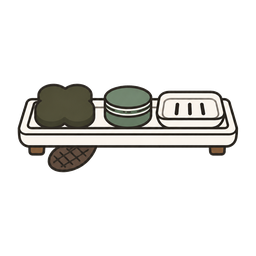


You're not just buying a cream or shampoo. You're buying a feeling: "it'll be safe here," "it'll work here," "it's worth my money."
And often it's not the smell that creates that feeling. It's not the ingredients. It's the packaging.
In this article, you'll take a short journey through time to understand why packaging has changed, what it promises (sometimes too much), and how to make smart choices today: cans, compacts, refills, and everything in between.

Packaging changes what you believe
There's a strange thing: the same product can look "serious" or "suspicious" depending on what it's packaged in.
A piece of paper with a stamp often evokes the confidence of “handmade.” Meanwhile, a shiny bottle with clean lines often says “laboratory,” even if the formula inside is quite simple.
By the way, the packaging also does a very practical thing. It protects the product from air, water, light, and the chaos of your bathroom routine.
Why it matters: If you understand the logic of packaging, you'll be less disappointed and less likely to buy "nice but doesn't work."
Practical takeaway (1 minute): The “packaging promise” test
Next time you're in the store, ask yourself three questions:
-
What is this packaging trying to promise me?
-
Is that promise about function (protection, dosage) or about image?
-
Will I pay for the content or for the feeling?
This exercise alone often saves very real euros.

Early packaging: papers, stamps, handwork
In the past, packaging was simple. It didn't "sell," it just protected.
Soap was wrapped in paper. Ointments were kept in small boxes. Fragrant balms were carried in wax or metal containers.
Paper as a silent "certificate of quality"
Paper wrapping was practical. It absorbed excess moisture, protected against dirt, and allowed the product to "breathe."
Today, paper often seems “green” to us. But historically, it was just smart and cheap.
Number (rough rule of thumb): paper wrapping often weighs about 2-5 g , if we are talking about one bar of soap or solid shampoo.
Why it matters: Paper often means fewer barriers between the product and the environment. That's a plus, but it also comes with a responsibility.
Practical takeaway: if you buy a product on paper, give it a "station" at home:
-
soap dish with drain
-
a shelf where it does not receive direct shower jets
-
a separate place where it dries and does not "float"
Stamps and marks of origin
A stamp on soap or a label on paper once did one job: it told you who made it.
It was an early trust mechanism. Not slogans, not promises, but "this is my job."
Micro story #1
You buy a bar of soap at a fair. It's wrapped in plain paper, with a small stamp. At home, it smells "real." But after a week, it starts to soften. And then you realize: the paper was only half the solution. The other half is your storage.
Why it matters: With minimalist packaging you get more control, but also more responsibilities.
Practical takeaway: If your product is softening, the first step is not to blame the formula. First, fix the storage.

Mass marketing: labels, promises, compliance
As cosmetics became mass-produced, packaging became the talk of the town. The label began to function as a mini-contract.
She says:
-
what's inside (at least theoretically)
-
what is it for
-
how to use
-
who is responsible
-
best before date
Label as "instruction", not decoration
Many people see the label as design. But it is your fastest way to avoid making the wrong purchase.
Especially with hard cosmetics, where the form often looks similar but the performance can vary greatly.
Why it matters: If you know how to read a label, you're less likely to be "nice, but not for me."
Practical takeaway: 3 things worth checking in 10 seconds
-
is this really the product (shampoo vs. cleanser vs. conditioner)
-
Is the method of use clear (on hands, in hair, on body, how much)
-
are there any warnings (eye area, sensitivity to odors)

INCI, PAO, batch code: what is actually useful for you
The INCI list may seem like a lottery. But you don't need to know chemistry.
You need to recognize several markers.
Numbers worth knowing:
-
The most common best before dates (BOT) for an opened product are 6M , 12M or 24M (months after opening).
-
"M" stands for months, not "medium" or "magic"
Why it matters: Solid products often last longer, but they can also change if they are constantly exposed to water.
Practical takeaway: if you buy a solid product without a clear PAO or instructions for use, consider it more "sensitive":
-
don't leave it wet
-
do not share with the whole family if you have sensitive skin
-
if the smell or texture has changed, take a break

The era of plastic and "clean design"
Plastic didn't win because it was beautiful. It won because it was comfortable.
It's light. It's cheap. It's leak-proof. It allows you to press, pump, dose.
And then "clean design" came along: minimal bottles, clean fonts, a laboratory feel.
Why is plastic so popular in cosmetics?
Plastic gave you control. You could squeeze out as much as you wanted. You could roll it up and throw it in your gym bag.
Numbers (rough rule of thumb) to give you an idea of the scale:
-
A 250 ml plastic bottle often weighs around 20-35 g
-
the cap adds about 5-8 g
-
the pump or nozzle can add even more because there is a mixture of several substances
Why it matters: A pack can weigh almost as much as your several weeks of routine in "travel" format.
Practical takeaway: if reducing the packaging "surcharge" is important to you, choose:
-
a larger volume if you really use it
-
a simpler cap instead of a pump if you don't need pumping
-
addition if it actually reduces packaging and not just looks "green"
Plastic codes: what to recognize
Recycling codes aren't a miracle. But they do help you understand what you're holding in your hand.
The three most common in cosmetics:
-
1 (PET) – often transparent bottles
-
2 (HDPE) – often opaque, “milky” bottles
-
5 (PP) – often lids, some jars
Why it matters: Different materials recycle differently. And mixed packaging is often more difficult to recycle.
Practical takeaway: if you want to make recycling easier, choose packaging that:
-
as few different parts as possible
-
the label is not "rubber", but simpler
-
not a lot of glue and shiny decorations
Micro story #2
You take a “clean-looking” pump to the gym. It looks expensive. But the pump gets clogged. You start pushing harder, and suddenly everything is too hot. It turns out that sometimes the packaging creates a problem that wasn’t even there inside the product.
Why it matters: Convenience comes at a price. Sometimes it's just nerves.

Cans, compacts, refills
The can is an interesting compromise. It looks "retro" but works very modern.
It protects from light. It's durable. It's often reused. And it has a sense of ritual: you open it, you close it, you put it away.
A tin can as a small "safe"
A can often works well for:
-
for solid perfume balm
-
for lip balm
-
for a travel mini product
-
for solid shampoo, if you have a suitable soap dish or insert
Numbers (rough rule of thumb):
-
an empty small cosmetic tin often weighs about 10-25 g
-
solid perfume balm often comes in a 10-20 g format
Why it matters: The can adds weight, but it can pay off if you fill it up and use it for a long time.
Practical takeaway: can and water are not friends. The key is drying.
-
give the product 30-60 seconds to "breathe" before closing
-
if you're in a hurry, at least dry the inside of the lid

Refills: when is it really convenient?
A replenishment system is only good when it doesn't bother you.
It works when:
-
can be replenished quickly
-
the filling is not messy
-
you don't need 5 different "special dishes"
It doesn't work well when supplementation is a "ceremony" that you do once and forget about.
Why it matters: The best sustainable system is one that you stick to effortlessly.
Practical takeaway: before buying a refill, ask yourself:
-
Is it convenient for me to wash and dry the dish?
-
Do I have a place to store supplements?
-
Do I really like routine, or do I want to "just open up and that's it"?
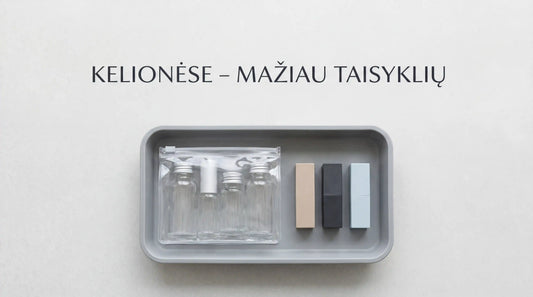
Hard cosmetics for travel: why they're such a winner
Even if you don't care about "sustainability," a simple thing wins when traveling: less fluids.
Numbers that many people know from practice:
-
most common rule on flights: liquids up to 100 ml in one container
-
everything fits into about a 1 liter bag (usually they ask for one)
This doesn't mean that the rules never change. But it's still a common scenario in reality.
Why it matters: Solid products often solve half of the travel logistics without any extra gimmicks.
Practical takeaway: for travel, choose:
-
solid shampoo + solid cleanser + solid conditioner (if it suits you)
-
one can that can hold the basket
-
soap dish or insert to keep the product from getting wet
Cost per use: a simple way to calculate
When a product is solid, it is worth measuring the price not "per piece" but "per use."
Numbers (rough rule of thumb) to give you a guideline:
-
a bar of solid shampoo is often around 50-100 g
-
Most people realistically use about 0.5–1.0 g per wash (especially until you get used to it)
Then the math is very simple.
If you have an 80g piece and use 0.8g per wash, you get about 100 washes. This is just a guideline.
Why it matters: "Expensive" is sometimes just an optical illusion when you don't see how many times you'll use it.
Practical takeaway: Intentionally use less than you want in the first week. Many people just multiply at first.
Micro story #3
You buy a solid shampoo because it's "for travel." The first time you rub it in for a long time because you want a lot of foam. After three weeks, it's already small, and you're disappointed. The second time you do it differently: rub it in 3-4 times, use water and your hands to help create the foam. And suddenly the same format becomes "wow."
Why this matters: Hard products often require a new movement, not a new product.
Quick comparison table
| Packaging | What does she "say"? | Who is best? | Common problems |
|---|---|---|---|
| Paper wrapping | "simple, handmade" | for homes where you have a soap dispenser | softens if kept wet |
| Plastic bottle | "convenient, fast" | for sports, for children, for shower | too much dosage, pump failures |
| Tin can | "ritual, longevity" | for balms, travel | condensation if you close it wet |
| Refill | "I plan" | for routine, family, favorite products | it's a mess if filling is inconvenient |
| Glass | "premium, stable" | for fragrances, serums | heavy, breaks, not for travel |

Packaging as a cultural symbol
Packaging is a small social signal.
Sometimes she says, “I care.” Sometimes, “I pay for aesthetics.” Sometimes, “I want things to be simple.”
And that's not bad. It's human.
Why it matters: When your packaging fits your life, you struggle less with routine.
Practical takeaway: create a “packing wardrobe”:
-
one convenient plastic product if you really need speed
-
one can that you love and fill
-
one minimal paper version if you like simplicity
Then you no longer feel like you have to choose one "right" camp.
A little safety reminder: if you are prone to contact sensitivity, try new products (especially fragrances) with caution. If something irritates your skin, take a break and, if necessary, consult a specialist.

Myths and unexpected facts
Below are the most common packaging myths that cost money and nerves.
-
Myth: “If the packaging looks premium, the product will be better.”
What's true: packaging often sells a feeling, not a result.
What to do: Evaluate the ingredients, usage, and your needs. Consider the packaging as a bonus. -
Myth: “paper is always the most sustainable.”
What's true: paper is great, but if the product melts due to storage, you lose the contents.
What to do: paper + a good soap bar is a team, not individual heroes. -
Myth: "refill is always more convenient."
What is true: refilling is only convenient when you are actually comfortable refilling.
What to do: Choose refills only for your favorite products that you use repeatedly. -
Myth: "A can solves everything."
What is true: The can can create condensation and "lock in" moisture.
What to do: Dry before closing. Use an insert if necessary. -
Myth: "Plastic is always bad."
What is true: Sometimes plastic is the most practical and safest choice, especially when tightness is required.
What to do: choose simpler packaging, reuse, and reduce the amount of "disposable minis". -
Myth: “A lot of foam means it cleans well.”
What is true: Foam is a sensation, not a single quality.
What to do: Learn the dosage. Solid shampoo often requires less rubbing, more water. -
Myth: "If the product is solid, it won't spoil."
What's true: Solid products can also change if they constantly get water and bacteria from your hands.
What to do: keep dry, do not use if the smell changes or if you experience any unusual sensations.

Practical tips to make it easier
Below are tips that most often "unlock" solid cosmetics and smart packaging.
Choosing: How not to overpay for "nice"
-
choose a package by location: home, sports, travel
-
if the product is new to you, start with a smaller format
-
if you see a refill, ask yourself if this will be your "re-use" product
-
avoid packages with many different parts if simplicity is important to you
First use: how to avoid starting out with disappointment
-
Use a small amount of solid shampoo the first 3-5 times to get a feel for the dosage.
-
Do not rub for long, just a few times, then "build up" the foam with your hands
-
if the product is very hard, warm it in your palms for a few seconds
-
if the perfume balm seems "too weak", wait 5 minutes: it often unfolds more slowly
Home storage: how to extend life
-
allow the product to dry completely between uses
-
If you use a can, don't keep it on a wet shelf all the time.
-
have a soap dish with a spout, not a flat dish
-
if several people use the same product, hygiene becomes more important
Travel: How to travel without chaos
-
one universal hard detergent often replaces 2-3 bottles
-
put the can in a separate bag if you are traveling with a wet product
-
Before leaving, let the product dry thoroughly for at least a few hours.
-
if you're flying, remember the common scenario of the 100 ml and 1 liter rule to avoid wasting cosmetics
Refill and reuse: how to make it stick
-
choose one "hero" can and fill it up instead of stocking up on 6 nice ones
-
If the refill requires washing, dry the container completely to avoid mixing odors.
-
write the opening date on the bottom with a small sticker if it helps you
-
if you are adding multiple fragrances, keep separate applicators to avoid mixing them up
Quick Start: If you just bought something
-
unpack and decide where the product will dry
-
Use less than you think you "need" the first time.
-
if it's a can, make a rule: I only close it dry
-
read 3 things: usage, warnings, PAO (e.g. 6M/12M/24M )
-
If you are sensitive to odors or irritation, start with a small area and observe the reaction.
Troubleshooting: if it "doesn't work" or is annoying
-
product softens → too much water, better drying is needed
-
moisture appears in the can → you closed it too quickly, dry the lid
-
too fast absorption → likely too high a dose, reduce rubbing
-
the smell has changed → pause, check the storage conditions
-
skin feels irritated → stop, go back to a simpler option, consult a specialist if necessary
-
the label is damaged → take a picture of the ingredients and instructions on the first day

FAQ
Is can better than plastic?
Not always. Cans are great if you're drying. Plastic is good if you need tightness and speed.
Why does solid shampoo sometimes not "foam"?
Mostly due to dosage and water. You rub too long, but too dry. Try a few strokes and more water for your hands.
Is refill really worth it?
It pays off when you repeat the same product. If you like to change often, refills can become another "system" that is annoying.
How to store a hard product in the bathroom so that it doesn't soften?
A soap dish with a drain, air circulation, and no "bathing" in the shower. This is 80% of success.
Can I share the same hard product with my family?
It can, but hygiene becomes more important. If someone has sensitive skin, it's better to have a separate piece.
What to do if a can starts to rust?
This is usually caused by constant moisture. Dry it out, store it in a drier place, and use a liner if possible.
Are solid products always "travel-friendly"?
They are often more convenient, but only if you have a solution for drying. A wet piece in a can can create a mess.

The end
Packaging is not just “the outside.” It is technology and culture at the same time.
The most important things to take:
-
Packaging builds trust, but doesn't always guarantee results
-
paper requires good storage
-
plastic wins in convenience, but it's worth choosing simplicity
-
The can and refill work best when they don't get in your way.
-
solid products usually require a new move, not a new purchase
Now I'm curious: what packaging inspires you the most confidence? And what makes you most nervous - cans, paper, or plastic pumps?
Tags:
Previous
Instagram, ASMR and selfies: cool cosmetics
Next
What history has learned: cycles, lessons, and a timeline of hard cosmetics
Paskutinės naujienos
-
Jan 12 2026
Why solid shampoo is not soap
-
Jan 10 2026
Instagram, ASMR and selfies: cool cosmetics
-
Jan 10 2026
The age of liquids: how bottles became premium

-
Jan 10 2026