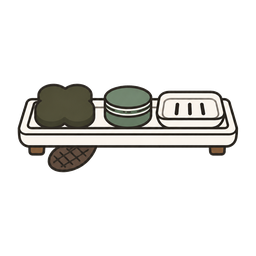


10-20 years ago, solid cosmetics often sounded like “old-fashioned soap.” But today, it’s more like a concentrated formula in a convenient form.
In other words, it's not just fashion that has changed. The rhythm of your life has changed.
Why it matters: When everyday life changes (travel, pace, less space), those solutions that save time and nerves win.
Practical takeaway:
-
If you travel at least once a month, play sports, live in a smaller space, or simply want "less stuff" - solid products become not an "eco idea" but a convenience solution.
Short real-life situation #1 (you'll recognize it):
-
You go away for the weekend. You throw in a 250 ml shampoo "for all the bad things". You come back with a wet bag because the cap has turned. Next time you take a 60-100 g solid shampoo (common weight), and the topic is closed.

Environmental messages as a catalyst (but without preaching)
It's important to be honest: many people come to solid cosmetics through "zero-waste." But in reality, they stay because of convenience.
Solid products often mean:
-
less packaging,
-
less "water transportation",
-
less bathroom shelf "noise".

Here it is worth remembering one simple logic: liquid products often have a large proportion of water. How much? The number depends on the product, but as a rough rule of thumb – in liquid cosmetics, water often makes up about 70–90% . This does not mean that liquid products are bad. It means that solid ones are often more concentrated in terms of the amount of “useful” ingredients per gram.
Why it's important: When a product is concentrated, you often need less per use.
Practical takeaway:
-
When buying, look not only at "natural/eco", but at real use: how many times will it last, how will it last, and whether you like the texture.
A small comparison to make it clear:
| situation | solid product | liquid product | what to choose in practice |
|---|---|---|---|
| There is not enough space in the bathroom. | takes up little space | takes up more | cool wins due to compactness |
| sensitive skin, requires precision | easy to "multiply" at the beginning | easy dosing pump | start with small amounts anyway |
| wants as little packaging as possible | often paper/box | often plastic | hard is often easier |
| want a quick, "no learning" | takes 3-7 days to get used to | usual immediately | if you want without adaptation – liquid |

Travel rules and portability as a driver of mass adoption
Here, solid products have a very practical superpower: they don't "get caught" by the rules of liquids.
In most places, the classic logic still applies: liquids in hand luggage must be up to 100 ml per package and placed in a transparent bag with a capacity of up to 1 liter . The US TSA rule is described as 3.4 oz (100 ml) and one quart-sized bag .
However, there is a new twist: at some airports with new generation scanners, the rules may be relaxed. For example, Vilnius and Kaunas airports communicated in 2025 about the possibility of transporting liquids up to 2 liters (depending on the screening line and the solutions used).
The most important detail: the situation may vary at different airports, so it is worth checking before your flight. The official EU travel guide still describes the 100 ml / 1 liter principle as a basic rule.
Why it matters: The winner in the journey is the one who minimizes the number of decisions and the risk of "taking away" in the check.
Practical takeaway:
-
If you're flying with only hand luggage, a solid shampoo, body wash, or fragrance might just solve the "mini bottle" headache.
Mini travel tips:
-
Dry the solid product completely first (at least 30-60 minutes before placing it in the tray).
-
If the trip is longer, choose a ventilated case or simple paper wrapping and only put it in a ziplock bag at the last minute.
-
If you're bringing solid shampoo and solid body wash, mark them (with a marker on the case) - it's very easy to get confused in the morning at the hotel.
Brief real situation #2:
-
You're flying with a carry-on. Everything fits in one 1-liter bag, but you still want cream and SPF. Then the solid shampoo and solid cleanser make way for something that really needs to be liquid.

Minimalism and the “less chaos” lifestyle
Minimalism often sounds like an aesthetic. But in reality, it's about reducing decision fatigue.
Solid products fit into minimalism for three reasons:
-
they are often multifunctional (e.g. one body and hand wash),
-
they do not visually "fill up" the shelf,
-
they travel easily.
Why it matters: Less stuff means less “minor housekeeping chores,” which no one likes.
Practical takeaway:
-
The goal of minimalism is not to have 1 product for everything. The goal is to have as many products as you actually use.
A small “quick audit” exercise (2 minutes):
-
Count how many opened shampoos/washes you have.
-
if there are more than 2-3, it is likely that some are standing "because of the mood".
-
then choose one "everyday" and one "specific" (e.g. for sensitive scalp).
Brief real situation #3:
-
You have a shower after a workout. You want it quick but gentle. A solid cleanser in your gym bag means you don't have to "pour it into minis" and still have a normal product.

Indie and DTC brands and formula jumps
This is where the biggest breakthrough happened. In the past, “hard” often meant just a compressed base. Now, indie and DTC (direct-to-consumer) brands have started to compete on texture, feel, smell, even how quickly a product “gives up.”
What has changed in practice:
-
more attention to the foam (so you don't have to rub for 2 minutes),
-
more conditioning sensation (so that hair doesn't feel "straw"),
-
better smell experience (not "soap", but real aroma),
-
more comfortable shapes (not just a brick, but also a thoughtful "grip").
Why it matters: As the formula gets better, the adaptation period gets shorter, and “hard doesn’t work” often becomes simply a problem of misuse.
Practical takeaway:
-
If you tried a solid shampoo a few years ago and were disappointed, there's a good chance the problem wasn't the "solid form", but the specific formula and your startup.
Rough rule of thumb about usage:
-
For many, 5-10 strokes through wet hair and 10-15 seconds of massage are enough to create lather.
-
If you rub for longer and still get "nothing", your hair is probably not wet enough or the bar is too hard for your water.

What has changed compared to the old "chunks"
If you're thinking of grandma's soap, that's understandable. However, modern solid products are often designed differently.
Differences you will feel:
-
softer “after-shower” skin (if the formula is balanced),
-
less of a “film” feeling (when the product rinses off well),
-
more of a "cosmetic" smell (but this is a matter of taste).
Why it matters: It's not the form that determines your experience, but the formula + method of use.
Practical takeaway:
-
Start with one product (e.g. shampoo) and give yourself 3-7 days to get used to it. The first few times are often “strange” because the dosage changes.

Myths and unexpected facts (myth → truth → what to do)
Myth 1: Hard shampoo is always drying
What's real: Some formulas can be drying, but not because they're "harsh." It's often because you're using the wrong type of cleanser or you're overdoing it.
What to do: Start with a smaller amount and observe the sensation for 3-5 washes.
Myth 2: Solid products are always “eco” and liquid products are always “bad”
What's real: packaging and transportation are important, but so is formula and usage. Also, if you keep the solid wet and it melts, the "eco" advantage is reduced.
What to do: optimize storage (drying, trays), not just purchasing.

Myth 3: Hardness needs to be rubbed endlessly
What's true: a few swipes and a good amount of water are usually enough.
What to do: First, wet your hair “to the point of squeaking.” This will make the product work more easily.
Myth 4: Cool is not suitable for dyed hair
What really matters: It's not the shape that's wrong, but the aggressive formula. There are gentler options that work for many.
What to do: Choose a gentler cleanser and always use a conditioning step if your hair tends to be dry.
Myth 5: Solid products are hygienically "unsafe"
What is true: if the product dries out, the risk decreases. Problems begin when it is constantly wet and closed.
What to do: keep it dry, don't store it in a puddle, and use a breathable case when traveling.
Myth 6: A strong scent is “weaker”
What's true: some solid scents (balms) last very well because the base can "hold" the aroma.
What to do: Apply to pulse points and start with a small amount.

Practical tips and solutions (12+ tips + 2 checklists)
1) How to choose so as not to be disappointed
-
Start with one category. One solid shampoo or one cleanser is enough for the first time.
-
Look at the weight and actual usage. Common solid shampoo weights are around 60–100 g (depending on the manufacturer).
-
Look for “feeling promises,” not just ideology. For example, “gentle,” “balanced,” “everyday.”
-
If you have sensitive skin or scalp, avoid extremes. Very strong scents and promises of "super clean" are more likely to irritate.
2) First week of use: most errors here
-
Use less than you think. Many people apply too much the first time because they "can't see the amount."
-
Add water. Hard foods often need more water, not more rubbing.
-
The goal of the foam is not a “mountain.” The goal is an even distribution.
Rough rule of thumb:
-
50-80 washes per 100g of shampoo is a range that is often cited as a "practical" experience, but it depends a lot on hair length, water and dosage. It is a guideline, not a promise.
3) Storage to prevent melting and "aging"
-
Drying is your friend. Let it dry for at least 30-60 minutes after use.
-
Don't keep it in a puddle. A soap dish with holes or a tray works wonders.
-
When traveling, don't put wet items in a sealed case. If necessary, wrap them in paper and only then put them in the case.
4) Travel strategy: as little stress as possible
-
For hand luggage, hard bags win. Because the 100 ml rule applies to liquids.
-
Have one "mini kit". Solid shampoo + solid cleanser + solid fragrance. And you are free from mini bottles.
-
Check the airport rules. Some new scanners allow more, but this is not universal.
5) Sensitive skin or scalp: how to act safely
-
Patch test if the product is scented or active. Especially if it is a strong scent or heavily perfumed cleanser.
-
Change one thing at a time. If you change your shampoo and conditioner at the same time, it will be difficult to figure out what went wrong.
-
If it stings or dries out, reduce the frequency and amount. Sometimes the problem is the dosage, not the product.
6) How to get the best result (without "rituals")
-
For hair: first wash the scalp, second wash the lengths (if needed). This often reduces the feeling of "heaviness".
-
For the body: it is better to lather in your hands or a sponge, rather than rubbing directly onto the skin. This makes dosing easier.
Quick start checklist (when you just bought it)
-
I wet my hair/skin really well.
-
I used a small amount for the first time (5-10 swipes or foam in the palms).
-
I rinsed longer than usual (especially the first 2-3 times).
-
I left the product to dry (30-60 min).
-
I observed the sensation after 3-5 uses, not just once.
Troubleshooting checklist (when it seems to be "not working")
-
Was the hair/skin wet enough?
-
Did I overproduce the product?
-
Did I rinse well (an extra 20-30 seconds)?
-
Wasn't the product always wet (melting, "slipping")?
-
Is the water hard and needs more rinsing/less product?
-
Did I try lathering in my hands instead of directly on my scalp/skin?
-
Do I give 3-7 days for adaptation?

A quick example of cost-per-use (typically)
There's no magic here, just logic.
-
Let's say a solid shampoo costs €10 and lasts you about 60 washes (rough rule of thumb).
-
€10 / 60 = €0.17 per wash.
-
-
Let's say liquid shampoo costs €8 for 250 ml .
-
If you use about 10 ml per wash (rough rule of thumb), you get 25 washes.
-
€8 / 25 = €0.32 per wash.
-
Moral: sometimes hard is cheaper, but not always. It all depends on your dose.

FAQ (quick and practical answers)
Is solid shampoo suitable for everyday use?
Often yes, but it depends on the formula and your scalp. If it's drying, use less or choose a gentler one.
Why is my hair "weirdly rough" after using a harsh shampoo?
Usually too much product or too little rinsing. Reduce the amount and rinse longer.
Is a solid cleanser suitable for the face?
Sometimes, but facial skin is often more sensitive. If you want to try it, choose a gentle one and do a patch test.
How to hygienically store a solid product in the shower?
The most important thing is that it dries. A soap dish with holes or a tray is a good way to ensure this.
Can I carry solid cosmetics in my hand luggage?
Yes, and that's one of the biggest advantages, because the liquid limits apply to liquids.
Is it normal to "not like" the first time?
Very normal. Dosage is different, feeling is different. Give it 3-7 days and adjust the amount.
What to do if a solid product melts too quickly?
Change storage: more drying, less water under it, a better tray, and not a sealed tray for wet things.

The end: what is worth remembering
-
Hard cosmetics are back because your life has become busier and more "compact."
-
It takes away a lot of the stress of 100 ml restrictions when traveling.
-
The biggest secret to success is dosage, water and storage.
-
If you tried it before and were disappointed, it's worth trying again, as the formulas have changed significantly.
If you want a continuation in logical order:
-
about how social media made cool products "cool" (see article #8)
-
and for contrast: how solids differ from liquids in routine and results ( see article #2 and article #5 )
Questions for you:
-
What annoys you the most about traveling with cosmetics?
-
and was your first attempt at a solid product a "wow" or a "meh"?
Tags:
Previous
Why some things survived: lip balm, deodorant stick, and powders
Next
Instagram, ASMR and selfies: cool cosmetics
Paskutinės naujienos
-
Jan 12 2026
Why solid shampoo is not soap
-
Jan 11 2026
Packaging is a culture: from paper to cans
-
Jan 10 2026
Instagram, ASMR and selfies: cool cosmetics
-
Jan 10 2026
The age of liquids: how bottles became premium

-
Jan 10 2026