

You buy a “solid shampoo” once, and a week later you think, “Why is my hair different?” Then you see another piece that says “soap-free,” a third that says “saponified oils,” and a fourth that says “syndet.” And suddenly it seems like everyone is speaking a different language.
Moreover, solid cosmetics often look similar. Piece by piece. But the feel, the result, and even "whether it sticks to the travel" can vary greatly.
Therefore, in this article I will give you a simple taxonomy that will help you avoid being fooled. You will learn to quickly "scan" a product according to 3 layers: area of use, chemical base and packaging. And, most importantly, you will understand why it changes the result.
Quick summary: why you need taxonomy
Taxonomy sounds serious, but it actually does one practical thing: it reduces wrong purchases.
When you know what format it is , what it's made of , and how it's packaged , you can almost always predict whether you'll like it.
Why it matters: Hard cosmetics aren't one category. They're several completely different product families that are simply "hard."
If you need a base on what is generally considered solid cosmetics (and what is not), go back to article 1 on the definition and boundaries . And if you want routines, storage, and common mistakes, it will be in article 3.

Taxonomy layer 1: by area of use
The first layer is the easiest: where you apply it . It sounds obvious, but this is where people "slip up."
Why? Because marketing loves universal words: "piece," "balm," "solid." And in your bathroom, it has to be specific.

Hair: solid shampoos, conditioners, scalp detox bars
What is this?
In the hair category, you will usually find solid shampoos, solid conditioners, and scalp bars. A typical solid shampoo weight is often around 50–80 g (a rule of thumb, not a standard). Solid conditioners are often similar – around 50–70 g .
How is it used?
Shampoo is for the scalp and roots. Conditioner is for the lengths. Scalp bars are often focused on the sensation: freshness, cleanliness, comfort.
Typical mistakes.
-
Rub the shampoo over the entire length as if it were soap.
-
You're trying to foam up your conditioner, even though it's not designed for that.
-
You buy "hard shampoo" that's actually soap, and then you blame it on hard cosmetics.
What to check.
-
Does the packaging clearly say "shampoo bar" or more like "soap"?
-
List of ingredients (INCI): are there surfactants (e.g. SCI, SLSa, etc.) or just oils + sodium hydroxide (more on this below).
-
How the product handles hard water (this is a common source of "why it didn't work for me").
Why is this important?
Hair is the most likely to show the difference between soap and syndet. Therefore, the hair category is your "quickest test."
Practical takeaway.
For your first few attempts, choose a shampoo that is clearly labeled as syndet or has surfactants in the INCI. This reduces the risk of a “waxy/flaky” feeling.
A short story (you'll recognize it).
You buy a "hard shampoo" at a fair. The first time, wow - lots of foam. The third time, your hair feels like it's covered in it. You apply more product because it seems "it's not washing out anymore." And so the circle goes round. Often it's not "hard cosmetics are bad", but simply the wrong base for your water and hair.
Face: cleansers, solid serums, balms
What is this?
Solid facial cosmetics come in two main types: solid cleansers (bars) and solid leave-in products (serums, balms). Facial cleansers often weigh around 60–100 g , but the range is wide.
How is it used?
The cleanser should rinse but not leave a film. The balm or serum should "sit" on the skin and feel good.
Typical mistakes.
-
You're using your face wash as body soap, rubbing it in for too long.
-
You apply the solid balm like a cream, in a thick layer.
-
Don't distinguish between "wash off" and "leave on" because both are hard.
What to check.
-
Is the product intended to be rinsed off or left on?
-
Are there fragrances if your skin is sensitive?
-
Packaging: Is it hygienic if it's for the face?
Why is this important?
The face is the quickest indicator of sensitivity. Even if everything is fine with the body, the face can "say no."
Practical takeaway.
If you're trying a solid face balm for the first time, start with "less than you think." It's better to add than to overdose.
Body: cleansers, lotion bars, scrubs
What is this?
For the body, you will find solid body washes, lotion bars (solid body butters), and scrubs. Lotions The pieces are often smaller – around 30–60 g .
How is it used?
The cleanser is rinsed off. Lotions a piece – left on, usually on warmer skin after a shower. Scrubs can be mechanical (with particles) or “dissolving”.
Typical mistakes.
-
Lotions You hold a piece in the shower and it "dissolves".
-
You rub the scrub too hard because "it's hard - you have to press it."
-
You buy body wash just for the scent, but it leaves a feeling you don't want.
What to check.
-
Or lotions? the piece has waxes/butters (normal), and will the packaging allow it to dry out.
-
Is the cleanser soapy or syndet (the feeling after the shower will be different).
-
Are the scrub particles too sharp?
Why is this important?
The body category usually "forgives" more mistakes, but here the most losses are due to storage.
Practical takeaway.
Body lotions Keep the piece dry. In the shower – only if it has a dedicated box with drainage.

Fragrance: solid perfume form
What is this?
Solid perfumes can come in a boxed balm, stick, compact, or even wax form. The typical amount is often 5–15 g (depending on the format and brand).
How is it used?
Most often, you apply it to your pulse points: wrists, neck, behind your ears. Solid perfumes are often closer, more intimate.

Typical mistakes.
-
Applying too much because it "doesn't feel like spraying."
-
Keep it in a warm place (in the car, on a radiator) and marvel at the texture.
-
Expect it to spread throughout the room.
What to check.
-
Is this really perfume and not a lip balm with a scent?
-
Is the fragrance composition/allergens listed (if you are sensitive).
-
Packaging: is it convenient to access and hygienic?
Why is this important?
In the fragrance category, "solid" often refers not only to the shape, but also to the other behavior of the scent on the skin.
Practical takeaway.
For solid perfumes, the rule of thumb is: start with one light touch, then wait 10 minutes.
A short story.
You pull out a little box in a coffee shop. You apply it to your wrist. It's quiet, no one looks back. And then your friend says 20 minutes later, "You smell so good." That's how strong perfumes often work.

Taxonomy layer 2: by chemical basis
Now is the most important part. Because it is the base that usually decides whether you will fall in love or be disappointed.
Why it matters: two pieces may look the same but be completely different "inside".

Soap-based products: real soap
What is this?
These are products based on saponified oils (oils + lye). You will often see phrases like “sodium olivate”, “sodium cocoate”, “sodium…” etc. in INCI.
What to expect.
-
Often the feeling of "cleanliness" is strong.
-
Hard water can cause a feeling of plaque.
-
It works for some people's hair, but it's frustrating for many.
Typical confusion.
-
"Natural" does not mean "one size fits all."
-
“Soap” doesn’t mean “bad.” It’s just another tool.
Why is this important?
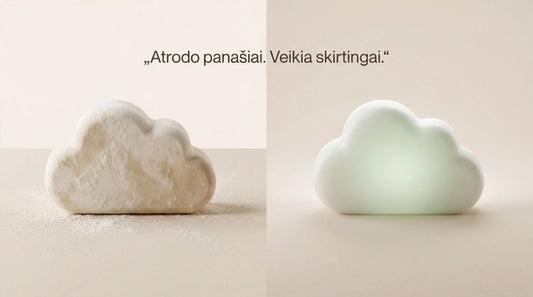
Soap often has a higher pH. Typically, soap has a pH of around 9-10 (a common range). This may feel different than your regular cleansers.
Practical takeaway.
If your hair feels "squeaky" after washing it and feels rough after drying, add a soap base and hard water.

Syndet-based products: soft foam pieces
What is this?
Syndet stands for “synthetic detergent,” but don’t be intimidated by the word “synthetic.” In the beauty world, it often simply refers to gentle surfactants that are designed to be more predictable.
What to expect.
-
It is usually easier for hair to "come together".
-
Less "soap scale" problems in hard water.
-
Often the pH is closer to skin and hair comfort. Typically, syndet bars often have a pH of around 5-7 (depending on the formula).
Typical mistakes.
-
Looking only at the word "natural" and ignoring how your hair actually feels.
-
Expect syndet to always be “soft.” Some are very good at washing.
Why is this important?
If you want less risk on your first try, syndet is usually a safer start.
Practical takeaway.
If you see "soap-free" on the packaging, it's often a hint at syndet, but still check the INCI.
Wax and butter-based products: balms and solid perfumes
What is this?
The base here is usually waxes (e.g. beeswax), butters (shea, cocoa), oils, and sometimes structural additives.
What to expect.
-
The product melts from body heat.
-
The feeling on the skin can be "protective", sometimes oilier.
-
The smell is often closer because there is no spray cloud.
Typical mistakes.
-
Keep it too warm and be surprised that it softened.
-
If you apply it too thickly, it will feel like "too much".
Why is this important?
These products are more about sensation and ritual, so packaging and application are very important.
Practical takeaway.
Apply it to warmer areas. And wait a few minutes for it to "unfold."

Powder-based products: washing powder, deodorant powders
What is this?
These are dry formulas that are activated by water or sweat. Sometimes they are pressed, sometimes they are loose.
What to expect.
-
Very convenient for travel.
-
Less water in a formula often means less need for preservatives, but it depends on the product.
Typical mistakes.
-
Pour too much. Then it becomes mush.
-
Use on very wet skin when only moisture is needed.
Why is this important?
Powder is a completely different game. It's not a "bar", so the expectations should be different.
Practical takeaway.
Start with a small amount. It's easy to add more.
Soap vs. syndet: a practical comparison that saves nerves
This part often solves 80% of the "why it didn't work for me" question.
Why this matters: A lot of the frustration with “solid shampoos” isn’t about the solid format, but about the soap base.

What does it mean and why do you feel it?
Soap is saponified oils. Syndet is a surfactant base.
The difference often comes down to this:
-
How does your hair feel after drying?
-
Does the feeling of plaque remain?
-
how the product behaves with hard water,
-
how easily it washes off.
If your water is harder, the soap can react with the minerals and leave a “film.” Then you put on more product because it seems like it’s “not getting washed away.” When in reality, you’re just making the problem worse.

Common label traps
Here are some phrases that can be confusing:
-
“Soap-free” often means “no soap.” But that’s not a 100% guarantee.
-
“Saponified oils” means “soap-like base.” That’s pretty self-explanatory.
-
"Syndet" is sometimes written in small letters or not at all. Then INCI comes to the rescue.
This is also important: according to EU rules, ingredients above 1% are usually listed in descending order. Below 1% , they can be listed in any order. Therefore, the first 5-7 ingredients often say the most.
Quick comparison table
| Criterion | Soap base (real soap) | Syndet base (foam piece) |
|---|---|---|
| Typical pH sensation | More often higher (e.g. ~9–10 ) | More often closer to skin comfort (e.g. ~5–7 ) |
| Hair feel after drying | Can be rougher, especially in hard water | Often softer, easier to comb |
| Hard water | More frequent, more risk of "plaque" | More stable result often |
| Foam sensation | Could be "harder" foam | Often creamier, depends on the formula |
| Who is more suitable for starting? | For body, hands, some skins | For hair and face when you want less risk |
Why is this important?
When you know the basics, you don't blame yourself anymore. You just choose the right tool.
Practical takeaway.
If you want "no surprises", choose syndet for your hair. Leave soap for your body, hands, or as a conscious choice.
When soap is totally okay (and when it's annoying)
Soap can be great for:
-
for hands and body, if you like the "clean" feeling,
-
when traveling, when you want minimalism,
-
if your skin tolerates it well.
But he is more often annoying:
-
when the hair is long, dyed or prone to frizz,
-
when the water is harder and a filmy feeling remains,
-
when you want "like after a salon" lightness.
A short story.
You try a bar of soap for your hair because it's "natural." For the first week, everything is bearable. Then you start adding more. And suddenly you need double the conditioner. This isn't your "wrong life." This is just chemistry.
Taxonomy layer 3: by packaging system
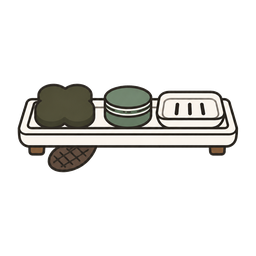
Once you understand the basics, packaging becomes another player. Because packaging changes hygiene, storage, travel, and even the feeling of "luxury".
Why it matters: Even the best The piece will be annoying if it is constantly wet and melting.

Without packaging or paper packaging
What is this?
Naked products or paper. Minimalism, less waste.
Pluses.
-
Easy to recycle.
-
Less weight when traveling.
Cons.
-
You need a good soap dish with drainage.
-
If you keep it damp, the bar will "eat itself."
Practical takeaway.
If you choose to go without packaging, invest in a good bar of soap. This is often more important than "just another bar."
Tin (tin)
What is this?
A metal box, often used for solid perfumes, balms, sometimes mini for pieces.
Pluses.
-
Convenient to carry in your handbag.
-
It looks neat and "gifty".
Cons.
-
If you put it wet piece, it may become soft.
-
Needs to be dried before closing for a long time.
Practical takeaway.
If you travel, leave Let the piece dry for at least 10-20 minutes before closing the box (a simple rule that saves lives).
Refill compact case
What is this?
A case to change refills in. This often looks more luxurious and "cosmetic".
Pluses.
-
Convenient if you want order.
-
Less disposable packaging in the long run.
Cons.
-
The case could be heavier.
-
Not always good for humidity.
Practical takeaway.
The refill format is great for facial and fragrance products. It is only suitable for shower use if there is a drain.
How packaging is changing hygiene, storage and travel
A few quick principles:
-
In the shower, drainage always wins.
-
In a handbag, tightness wins.
-
The face benefits from cleanliness and less "general rubbing."
If travel is important to you, remember: most airports still have a “liquids” rule of about 100 ml per container and about 1 l per bag, but some airports may have different rules. Therefore, solid cosmetics often become a “headache-free” solution.

A "decoder" of shopping language: what phrases usually mean
Marketing loves pretty words. You can love them and still understand what they usually signal.
Why it matters: You're not buying a promise, you're buying a formula.
Mini glossary
-
"Soap-free" → often synthetic, but check INCI.
-
Saponified oils / saponified → soap base.
-
"pH balanced" → could be marketing; look for the context where it is used.
-
"For sensitive scalp" → often means gentler cleansing, but not a guarantee.
-
“Natural fragrance” → can still be irritating. Natural does not equal gentle.
-
"No preservatives" → often because the product is dry. But it depends on the formula.
-
"Concentrated" → solid products are often more concentrated because they contain less water.
Practical takeaway.
The most beautiful words are bonus. Make your decision based on: use + base + packaging.

Myths and unexpected facts
Below are the myths that most often ruin the experience. I keep the format strict: myth → what's true → what to do.
Myth 1: "If it's cool, it's always greener"
What is true?
A rigid format often reduces the need for plastic, but packaging and logistics solutions are still important.
What to do instead.
Look at the packaging and actual usage. If the bar melts, you're wasting the product.
Myth 2: “Solid shampoo is always the same”
What is true?
Solid shampoo can be soap-based or syndet-based. The feel can be radically different.
What to do instead.
Check the INCI. It is often easier for hair to start with syndet.
Myth 3: "If it doesn't lather much, it doesn't clean well"
What is true?
Foam is not a measure of cleaning effectiveness. Also, some gentle products foam less.
What to do instead.
Give yourself time: rub in for 30-60 seconds , then massage your scalp and rinse.
Myth 4: “Solid perfumes have to smell like they’re sprayed”
What is true?
Solid perfumes are often closer, more “to the skin.” This can be an advantage.
What to do instead.
Judge them by how they feel after 10-20 minutes , not the first second.
Myth 5: “If it’s natural, it’s definitely good for sensitive skin”
What is true?
Natural essential oils and fragrances can also be irritating. Sensitivity is not a moral test.
What to do instead.
Do a patch test. And choose less fragrance if your skin reacts.
Myth 6: “You need to press hard on a solid product because it is hard”
What is true?
Most solid products work from heat and water, not force.
What to do instead.
Use less pressure and more technique.

Practical tips that actually improve results
I've organized the tips into topics here so you know what to do right away.
Topic 1: How to choose faster (4 tips)
-
First decide where you will use it: hair, face, body or fragrance.
-
Then check the base: soap or syndet (syndet is usually safer for hair).
-
Third, evaluate the packaging: will you have somewhere to dry it?
-
If in doubt, choose a simpler formula with fewer fragrances.
Topic 2: First use (4 tips)
-
For shampoo, 1-2 strokes through the roots or lather in the palms are enough.
-
The first time often looks different than the third. Give it 3-5 washes to adapt (a rule of thumb).
-
If it's a solid conditioner, don't try to lather it. Just "apply" it to the lengths.
-
If it's a balm or solid perfume, start with a minimal amount.
Topic 3: Water and sensation (2 tips)
-
If you feel a "film" after washing, reduce the amount of product, rinse longer, and add soap base.
-
If your water is harder, syndet will often give a more stable result.
Topic 4: Storage and hygiene (4 tips)
-
The piece needs air. A soap dish with a drain is your best friend.
-
Only store dried product in the can.
-
Choose a face shape that "interacts" less with all the fingers in the family.
-
If the product starts to soften, the problem is usually moisture, not the formula.
Topic 5: Travel and handbag (2 tips)
-
Solid cosmetics are convenient to carry, as they are usually not subject to liquid restrictions (but still check the rules).
-
Have a small box with ventilation or paper wrapping for a short time.
Topic 6: Sensitive skin and caution (2 tips)
-
If you are prone to reactions, do a test patch test on a small area of skin.
-
Avoid heavily scented formulas if you already know that this is a problem for you.

Quick start mini checklist: what to do when you just bought something
-
Read what the product is intended for: hair, face, body or fragrance.
-
Check if it is soap or syndet (INCI).
-
Prepare storage: a soap dish with drainage or a box.
-
Use less product than you want the first time.
-
Rinse longer than usual, especially for hair.
-
Monitor the result after 2-3 times, not after the first one.
Troubleshooting mini checklist: if it doesn't seem to be working
-
Is your hair rough? Check if it's soap and if the water is hard.
-
Feel a film? Reduce the amount, rinse longer, change your technique.
-
Is the product melting? Change the storage, not the product.
-
Perfume "disappearing"? Apply less, but on pulse points, and wait 10–20 minutes .
-
Is your face feeling tight? It could be that your cleanser is too aggressive or you're using it too often.
-
No foam? Rub longer and start with a wet palm, not a dry bar.
Mini example: simple cost-per-use calculation
Sometimes it's not a feeling that helps, but mathematics.
Let's say a solid shampoo costs €12 . You get about 60 washes (a rough rule of thumb, will depend on length and quantity). Then one wash costs about €0.20 .
Why it matters: You can compare not only the "price on the shelf", but also the actual usage.
Mini checklist: how to classify any product in 60 seconds
Follow these three steps. Simple but very effective.

Step 1: Area of use
Ask yourself:
-
For hair?
-
For the face?
-
For the body?
-
Smell?
If the label is unclear, that's a red flag.
Step 2: Base (Chemistry)
Look at the beginning of INCI:
-
If you see "sodium …ate" (e.g. sodium olivate) and "saponified," it's probably a soap base.
-
If you see surfactants (e.g. SCI, SLSa, etc.), it is more likely syndet.
-
If you see waxes and butters, it's a balm/perfume.
-
If you see powder, it's a powdered format.
Step 3: Packaging and storage
Ask:
-
Will I be able to dry this?
-
Will this travel with me?
-
Will this be hygienic for my routine?
Why is this important?
These 3 steps reduce "I bought it, but I'm nervous" situations.
Practical takeaway.
If chaos arises at one step, choose a clearer product. This is normal.

FAQ: Frequently asked questions about solid cosmetics
Is solid shampoo always suitable for colored hair?
Not always. Colored hair often responds better to milder syndet bars. So start with those.
How do you know if a bar is soap or syndet?
Most likely according to INCI. If you see saponified oils, it's soap. If you see surfactants, it's syndet.
Why does a solid product "eat itself" in the shower?
Mostly due to storage. It stands in a puddle or without air. The solution is drainage and drying.
Do solid perfumes last shorter than sprays?
Some people may find it shorter because the projection is smaller. But many find that it sits nicely close to the skin. Test it on your skin.
Can a solid cleanser be used on the face every day?
It depends on the formula and your skin. If it feels tight or dry, reduce the frequency or choose a gentler one.
Does "natural scent" mean safer?
Not necessarily. Natural fragrances can also be irritating. If you're sensitive, choose a milder scent or one that's unscented.
Is a patch test necessary?
If you have sensitive skin, a history of allergies, or are trying a new scented balm, yes. It's easy and often saves you trouble.
Conclusion: What to remember
-
Solid cosmetics are not one category. They have different families.
-
The fastest path: user area → base → package.
-
Syndet usually poses less risk to hair.
-
Packaging and storage can ruin even a good product.
-
Quantity and technique are often more important than "an even stronger bar."
What do you want to fix first: your hair, your face, or your travel routine? And have you ever had that situation where a "hard shampoo" disappointed you, but later it turned out to be just soap?
Tags:
Paskutinės naujienos
-
Jan 12 2026
Why solid shampoo is not soap
-
Jan 11 2026
Packaging is a culture: from paper to cans
-
Jan 10 2026
Instagram, ASMR and selfies: cool cosmetics
-
Jan 10 2026
The age of liquids: how bottles became premium

-
Jan 10 2026